
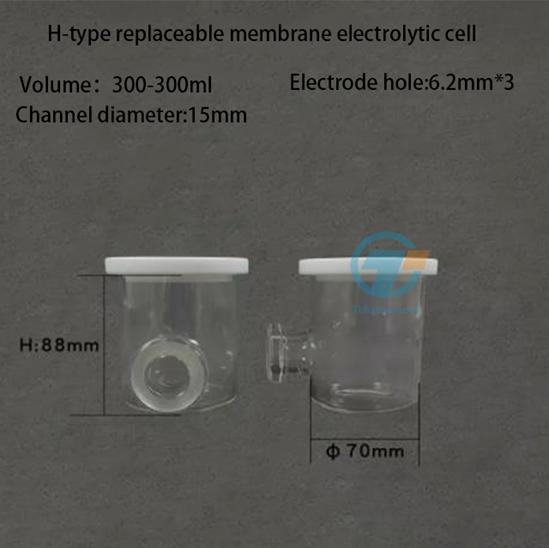
Unsealed H-type electrochemical cell, glass, 300 ml
Rp123.00
Our Unsealed H-type electrochemical cell (also known as a divided cell) consists of two separate glass compartments connected by a bridge. This "H" geometry is specifically designed to isolate the chemical reactions occurring at the anode from those at the cathode.
Why use an H-type over a Single-Cell?
Separation of Products: In a single cell, the product created at the Working Electrode might migrate to the Counter Electrode and react back to its original state (a "shuttle" effect). The H-design prevents this.
Ion Exchange: The bridge usually contains a Fritted Glass Disc or a Nafion Membrane. This allows ions to pass through to maintain electrical neutrality while blocking the large molecules or gases produced at the electrodes. Metrohm Knowledge Base
Low Interference: It ensures that the Reference Electrode only measures the environment of the Working Electrode without "noise" from the Counter Electrode’s reactions.
Common Applications:
Electrosynthesis: When you need to collect a specific chemical product without it being destroyed at the opposing electrode.
CO2 Reduction Research: Separating the CO2 reduction products from the oxygen evolved at the anode.
Proton Exchange Studies: Often used in Fuel Cell research to test membrane efficiency.
Standard Redox Potential Measurements: Providing a "clean" environment for highly sensitive measurements.