
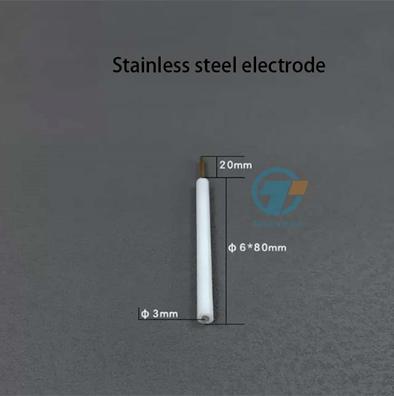
Stainless steel disk electrode SS316, 3 mm, 6*80 mm
Rp123.00
Our stainless steel disk electrode SS316 is an electrode commonly used in electrochemical research, particularly for corrosion studies, due to its inherent resistance to various chemical environments. The material SS316 is a robust, low-carbon austenitic steel containing molybdenum, which provides enhanced resistance to chlorides and acids compared to standard 304 stainless steel.
Primary Applications:
Corrosion Behavior Studies: Frequently employed as a working electrode to analyze the corrosion mechanisms of stainless steel itself in various media (e.g., lithium bromide solutions, soil environments) using techniques like polarization curves and electrochemical impedance spectroscopy (EIS).
Biomaterial Research: 316L stainless steel specimens are used to study the interaction and corrosion behavior of metallic biomaterials with living cells, as it is a common material for bone plates and stents.
Electrochemical Oxidation/Remediation: Used as an affordable and effective electrode in the electrochemical treatment of organic pollutants, though oxidation of the anode material can occur.
Fuel Cell Component Testing: Investigating the material's suitability and long-term stability as a potential bipolar plate material in proton exchange membrane fuel cells (PEMFCs).
Electroplating/Polymerization: Used as a substrate for electropolymerization or electroplating to enhance the surface's properties or biocompatibility.